


 Tax Region


Sixty-Second Motorcycle Brake Hose Check | Venhill
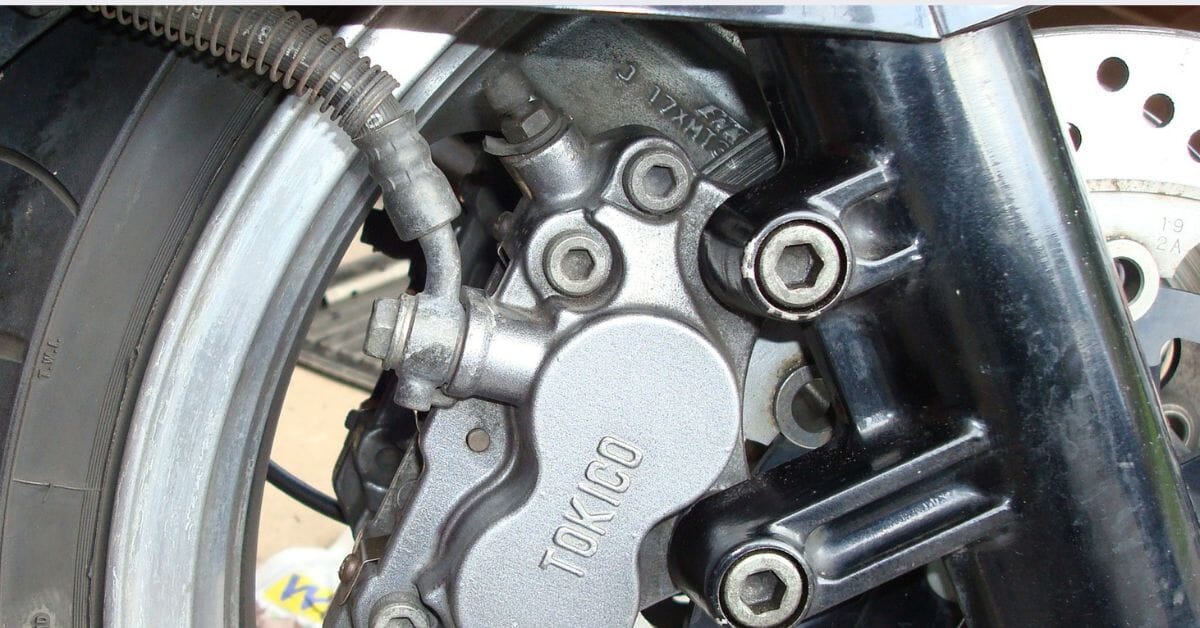
How to check motorcycle brake hoses for wear
Your brakes are only as good as the hoses carrying pressure from lever to calliper, and like most components they will degrade with time and repeated use, affecting braking performance - or failing altogether.
It's a gradual process, which means it's easy to miss, but the good news is that hoses will usually give you warning signs before things get serious. Here's how to spot them in under a minute:
1. Start at the fittings
The banjo fittings at each end, where the hose connects to the master cylinder and the calliper, are the most vulnerable points. Get in close and check for corrosion, cracks, and any sign of weeping fluid; a dark stain or oily residue around a fitting isn't road grime, it's a leak, and it needs attention before you ride.
2. Run your hand along the hose
Feel the full length of the hose with your fingers. You're looking for anything that feels wrong: bulges, soft spots, kinks, or areas where the outer covering has cracked or split. On rubber hoses in particular, the surface can perish and crack with age, even if the hose looks okay at a glance. Trust your fingertips as much as your eyes.
3. Check the routing
Follow the hose along its run and make sure it isn't rubbing against any sharp edges, frames, or other components. Check that it has enough slack to follow the forks through full steering lock without pulling tight, but not so much that it's looping or catching anywhere.
4. Test for expansion
This one's easy and very revealing. Hold the hose firmly in your hand and apply pressure to the brake lever or pedal. A hose in good condition won't move much. If you can feel it swelling under your grip, the hose is ballooning under pressure, and that means braking force is being lost before it ever reaches the calliper. Soft, spongy lever feel is often the first clue, but this test confirms it.
5. Check your lever feel
Finally, pump the lever a few times. The action should be firm and consistent. Any sponginess, vagueness, or a lever that travels further than it used to are all signs that something in the hydraulic system (possibly the hose) needs a closer look.
A smarter upgrade with Venhill
If your hoses are showing their age, or if you've never changed them and don't know how old they are, it's worth replacing them before you need to.
As a general rule, most brake hoses need changing every four to six years, and sooner if you're seeing any of the warning signs above.
Venhill Powerhose Plus braided brake lines are built to a considerably higher spec than the rubber hoses most bikes leave the factory with. A DuPont® Teflon® (PTFE) core resists heat, maintains a consistent internal diameter, and won't soften or balloon under pressure; unlike budget nylon-lined alternatives.
Marine-grade stainless steel braid surrounds the core, offering superior corrosion resistance, with a bonded PVC outer jacket that protects against sunlight, road salt, and debris.
Threaded stainless steel swivel fittings mean the hose can be positioned without twisting, and every hose is pressure tested to 1,500 psi before it leaves the factory. The result is sharper, more consistent braking, better feel through the lever, and a hose that will outlast the rubber lines it replaces many times over.
Use the online Part Finder to search for replacement brake line kits to fit your motorcycle.

- [email protected]
- +44 (0) 1306 885111
- Venhill, 21 Ranmore Rd Dorking, Surrey, South East England, RH4 1HE, GB,